

Be More Eno
The most interesting thing about Eno is not just what he makes, but how he thinks.

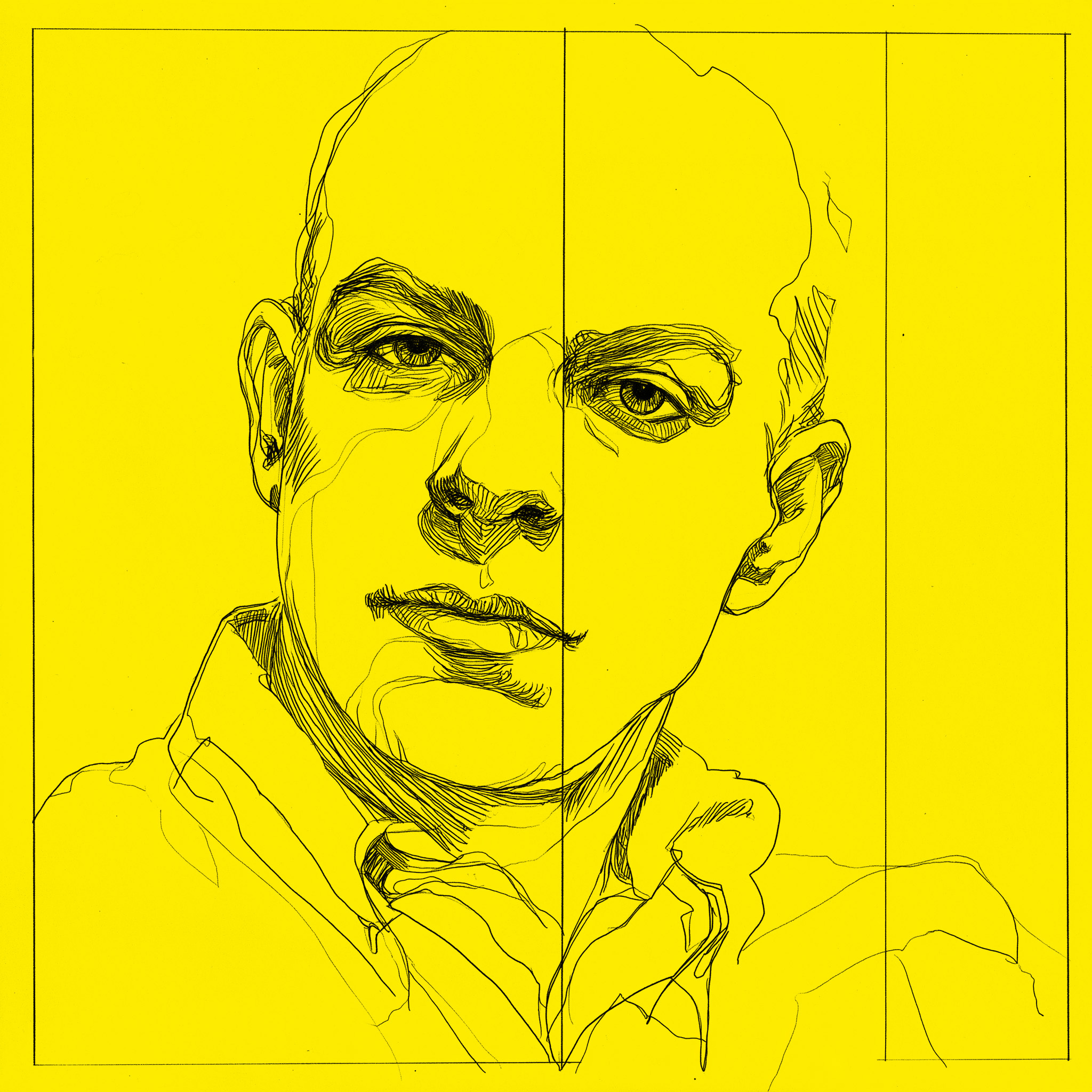
It was Thursday, 24 August 1972, when I first encountered Brian Peter George St John le Baptiste de la Salle Eno or Brian Eno for short.
I was sitting in front of the TV watching Top of the Pops with my family when the now familiar buzz of Phil Manzanera’s guitar combined with the stabbing piano chords of Bryan Ferry opened Roxy Music’s breakthrough hit Virginia Plain.
I was 8 years old.
If you watch it back now on YouTube you don’t see much of Eno. He’s the one in the fur cape, silver gloves, long straight blonde hair with a sharp fringe and cheekbones like scaffolding. In front of him, what looks like the dashboard of a spaceship, all buttons and knobs, is what I later learned was an early synthesiser.
Ferry’s voice had that slightly off-kilter quality, like a record dragging on a turntable. The whole band looked extraordinary, but while the others looked dressed up, Eno looked like he’d landed from another planet.
He left the band less than a year later, and I thought nothing more of him.
Fast forward ten years. Roxy Music had gone mainstream and I was at art school. One night, after the pub, I ended up at a friend’s flat where the party carried on. Someone put on Eno’s solo albums Here Come the Warm Jets, Taking Tiger Mountain (By Strategy) and Before and After Science, and there was that sound again.
“Oh, I love this guy,” I said.
“If you like that, wait until you hear this,” my friend replied.
My Life in the Bush of Ghosts, Eno’s first collaboration with David Byrne, was unlike anything I’d ever heard. Samples of radio DJs, Arabic singers, and an American evangelist mid-exorcism, all woven into layers of sound. It was avant-garde, groundbreaking, brilliant. It blew me away.
From then on, Eno became a constant reference point. I discovered and followed his work as he produced and reinvented Bowie, invented ambient music, co-created Oblique Strategies, helped U2 to their biggest albums, wrote books, composed film scores, pioneered generative music and apps, created visual installations, and became an activist and philanthropist. All while continuing to collaborate with some of the most inventive artists of our time.
Now in his late seventies, Eno is still eloquent, wise and just, well, bloody interesting. His lectures on ideas like scenius (creativity as a collective act), or his point on form and function using screwdrivers, or his view that life is a balance between control and surrender, are all case studies in how to think differently.
Which brings me to the point. The most interesting thing about Eno is not just what he makes, but how he thinks. Through his writing, interviews and conversations, he has laid out a creative philosophy that is both practical and generous.
I’ve identified ten recurring patterns in his thinking:
Accidents as Material – chance events aren’t mistakes but inputs.
Constraints as Catalysts – limits force invention.
Systems over Genius – frameworks make creativity repeatable.
Collaboration as Multiplication – others extend your imagination.
Boredom as Data – repetition signals when to shift.
Technology as Partner – machines as collaborators, not tools.
Generosity of Ideas – circulation matters more than ownership.
Failure as Fertile Ground – what doesn’t work teaches more than what does.
Art as Social Experiment – work changes how we see.
Contradiction as Energy – thrive in the tension between structure and improvisation.
It is interesting to discover how many of these principles align with the Applied Creativity Framework and over the next few weeks, I intend to research and expand each theme into an actionable ‘Be More Eno’ strategy. Simple moves that you and your teams can use while creative problem-solving.
This will be fun, and I hope useful. So look out for each one, and together, we can all Be More Eno!